Strategic vision. Technical rigour. Sound decisions.
Legal, tax and business consultancy — 360°
We advise business owners, investors and corporate groups on the decisions that shape the structure, performance and future of their organisations.
Experience
More than three decades advising companies, shareholders and investors, including large-scale negotiations with the State and with regulatory authorities.
Technical rigour
Every position rests on documented, reasoned analysis. No shortcuts, and no conclusions that would not withstand outside scrutiny.
360° perspective
A business problem is rarely purely tax, purely financial or purely corporate. We bring the relevant skills together around the case itself, rather than splitting it across specialisms that do not talk to each other.
Proximity
A deliberately small structure. Whoever discusses the problem is the person who sees it through. Discretion on client matters, visibility on ideas.
Practice areas
Five areas that rarely arise in isolation. A reorganisation is at once a governance question, a financing question and a tax question — and that is how we treat it.
Strategic and Integrated Projects
Consultancy and design of strategic, integrated projects. Growth planning, change management and reorganisation of activities, with the commercial and marketing component built into the project.
Corporate Governance
Governance models, corporate structures, internal regulations, planning and organisation of sound management practice, risk management and ESG.
Economic, Financial and Tax Advisory
Economic and financial analysis of transactions and structures. Tax advice on reorganisations, tax incentives and planning. Preparation of financial information for shareholder and investor decisions.
Business Transfers
Valuation, brokerage and negotiation in the purchase and sale of companies, businesses and establishments, and related services, including the negotiation of shareholdings.
Strategic Communication and Crisis Management
Consolidating the external image of the organisation and of its principal shareholder. Preventive and reactive work in corporate or reputational crises, building and using contact networks, and developing the capacity to influence and protect standing with stakeholders — particularly the media and public opinion, internal and external. Includes independent monitoring of the media impact of legal strategy.
LMH coordinates and integrates the skills each engagement requires. The legal component is provided by lawyers registered with the Portuguese Bar Association, on a partnership basis; LMH does not carry out acts reserved to lawyers.

The Firm
LMH began from a simple observation: the most consequential business decisions rarely fit within a single discipline.
A group reorganisation is a governance question, but also one of financial structure and taxation. A business transfer is a negotiation, but it is settled above all through rigorous valuation and sound structure. When these dimensions are handled separately, by teams that do not communicate, the result is correct technique and wrong decisions.
That is what 360° means: not a claim to know everything, but a method for bringing together those who know each part, around the same problem and under a single coordination.
The founding partner
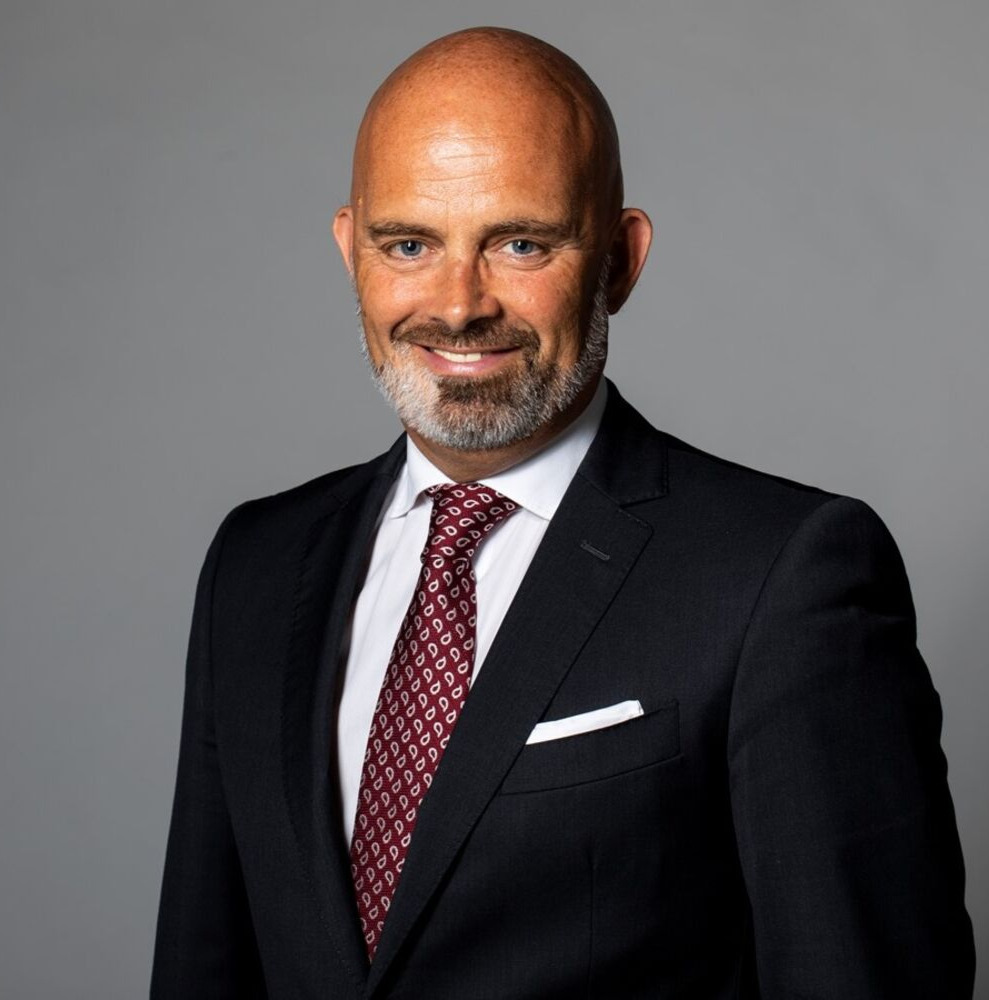
LMH was founded in 2015 by Luís Miguel Henrique, who serves as managing partner and coordinates every engagement.
A law graduate of the University of Lisbon School of Law, he has more than three decades advising companies, shareholders and investors. He led the strategy and negotiation of the agreements reached with the Portuguese State concerning the claimants of Banco Privado Português, in 2010, and of Grupo Espírito Santo, in 2016 and 2017. He served as chief executive of LIDE Portugal and as vice-president of LIDE Internacional.
He was one of the creators and directors of PROMENTOR, the professional mentoring programme for SMEs created by the Catholic University of Portugal with Deloitte.
He coordinated the postgraduate programme in Digital Law and Strategic Communication at Universidade Europeia. He writes weekly for Record and for Jornal de Negócios.
It is around this track record that the network is organised: the coordination is always the same, the skills called upon vary with the case.
The model
LMH is a coordination structure, deliberately lean. It does not keep permanent staff across every specialism — it maintains a stable network of qualified professionals and calls in, for each engagement, exactly the skills the case requires. No client pays for structure their case does not need.
Statutory Auditors
Statutory audit, assurance and company valuation.
Certified Accountants
Bookkeeping, reporting and filing obligations.
Lawyers
The legal component of engagements. Professionals registered with the Portuguese Bar Association.
Economists
Financial modelling, valuation and feasibility analysis.
Insolvency Administrators
Recovery and insolvency proceedings.
Sector specialists
Engaged according to the client's sector of activity.
Non-Executive Directorship (“NED”)
The non-executive role is not day-to-day management. It is supervision, strategic advice and independent scrutiny of the executive's decisions — and it is now a mark of institutional credibility, not a formality.
We accept appointments as non-executive director in companies operating under regulatory complexity, public exposure or pressure on capital. Appointments are held personally by Luís Miguel Henrique.
Supervision and challenge
Independence of judgement and constructive scrutiny of the executive's decisions, while they are still proposals.
Compliance and informed decisions
Legal competence inside the board itself, reducing reliance on ad hoc external advice and making decisions regulatorily sound.
Capital and M&A
A closer's profile on transactions: raising capital, bringing in investors and dealing in shareholdings.
Communication and crisis management
Reputational protection for organisations under constant public exposure.
Where we serve
- Boards of directors, as non-executive director
- Board committees — audit, remuneration, nominations, risk and sustainability
- Shareholder representation on investee companies, at the nomination of investors, funds and family offices
- Advisory boards and family councils, in family businesses
- Transition mandates: incoming investor, succession, restructuring or preparation for a sale
What the board gains
- Governance. Independent supervision and regulatory compliance, with less reliance on ad hoc external advice.
- Decisions. Market judgement, transaction structuring and a credible bridge to investors.
- Reputation. Experienced communication and crisis management, protecting the institutional brand.
Reach: Portugal and Brazil
In Portugal, qualified access to decision-makers and to leading media groups — strengthening the board's institutional reading and the management of its public narrative.
In Brazil, an established network and cross-border experience that make it possible to broker relationships, identify opportunities and open investment channels. Exposure to capital flows from other regions extends the company's reach on larger transactions.
Independence and conflict management
Independence is not declared: it is instituted. Three commitments frame any appointment, set before it begins rather than after a problem arises.
- Conflicts of interest. Formal declaration of interests and impediments, abstention on related resolutions, and restricted matters defined from the outset.
- Public voice. Editorial discipline while serving as director, with a clear separation between public commentary and the board role.
- Continuity. Progressive institutionalisation of knowledge and relationships within the company, rather than their retention in one person.